Xinouhua Power
China’s Single Phase DC-DC Converter market includes established manufacturers, specialized suppliers, and fast-growing engineering teams. This guide examines companies that serve industrial automation, telecommunications, electric vehicles, medical equipment, and embedded power systems. The focus is practical: efficiency, input range, output stability, thermal design, protection features, certification, and after-sales support.
Ray Ridley, founder of Ridley Engineering and a respected power-electronics specialist, has taught: “The control loop is the most important part of a power converter.” That principle remains valuable when comparing a Single Phase DC-DC Converter manufacturer. A polished enclosure means little if voltage ripple increases under load. Small details matter. Look at switching frequency, isolation distance, transformer construction, cooling paths, and test documentation. A supplier should also explain performance at low input voltage, high ambient temperature, and sudden load changes.
“Datasheets are only the beginning.”
This article introduces leading Chinese manufacturers through a balanced technical and commercial lens. It considers factory capability, research experience, customization support, production consistency, and international customer service. However, any “top” ranking has limits. Public information can be incomplete, and marketing language may hide important test conditions. Buyers should request samples, compliance files, lifecycle data, and realistic delivery records before making a decision. The strongest manufacturer is not always the largest one. Sometimes, a smaller team responds faster and solves a difficult integration issue. That possibility deserves attention. A reliable comparison should combine verified evidence with hands-on evaluation, not reputation alone.
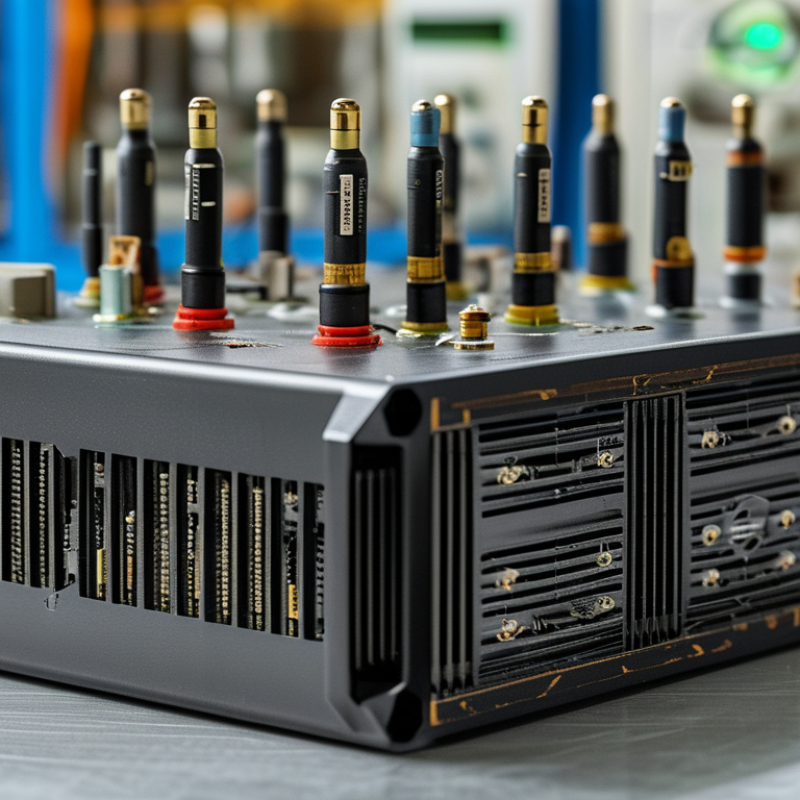
Single-Phase DC-DC Converters: Definition, Functions, and Applications
A single-phase DC-DC converter changes one DC voltage level into another through controlled switching. The term usually describes one primary switching path, not an AC phase system. Common topologies include buck, boost, and buck-boost circuits. Isolated versions use a transformer for safer voltage separation. Non-isolated designs are often smaller and more efficient.
Its main functions include voltage regulation, power conversion, battery charging, and load protection. A controller adjusts the switching duty cycle when input voltage or load demand changes. Engineers should check efficiency, output ripple, transient response, thermal limits, and electromagnetic interference. A quiet waveform matters in sensors and communication equipment. It matters less in some basic motor systems.
These converters support battery-powered instruments, industrial controllers, LED lighting, telecommunications hardware, and vehicle electronics. In a compact control cabinet, a converter may reduce 48 VDC to stable 12 VDC for relays and processors. During testing, a load step can reveal problems hidden by a normal multimeter reading. Heat sinks also deserve attention. A converter can meet its rated current briefly, yet fail under continuous heat. Datasheet values should be verified with real temperature, wiring, and airflow conditions. A design may look correct on paper. That is not always enough.
Evaluating China’s top manufacturers requires more than comparing catalog prices. I start with the datasheet, then verify its numbers under defined conditions. Check input range, output tolerance, isolation rating, efficiency, ripple, and standby current. A converter claiming 95% efficiency may reach it only at one load and room temperature. That detail matters.
Ask for test reports linked to serial numbers, not generic PDFs. Request samples from normal production, then measure startup behavior with an electronic load. Watch the output during sudden changes from 20% to 80% load. Record case temperature after two hours. Hot spots near the transformer or switching devices can reveal weak thermal design. Review protection for short circuit, overvoltage, overtemperature, and reverse polarity. Request evidence of relevant quality systems and product safety compliance for your destination market. Do not treat certificates as a substitute for testing.
Factory communication is another practical filter. Engineers should explain derating curves, component substitutions, and control limits clearly. Visit, or arrange a live video audit, to inspect incoming inspection, aging racks, calibration records, and final testing. Ask how failures are traced and how corrective actions are documented. One weakness remains: remote audits can miss process shortcuts. I would keep a second source qualified, even after a successful pilot. Reliable supply depends on repeatability, not a persuasive sample.
China’s leading single-phase DC-DC converter manufacturers serve automation, communication, lighting, and battery-powered equipment markets. Their specialties differ considerably. Some focus on compact buck converters for 12V-to-5V control systems. Others develop boost units for unstable battery outputs. Isolated converters are common where signal protection and electrical separation matter.
Manufacturing depth often appears in the details. Strong suppliers offer wide input ranges, adjustable output voltage, short-circuit protection, and controlled thermal performance. They may also provide custom enclosures, connector layouts, and private-label engineering support. A practical buyer should request efficiency curves, ripple measurements, load-test records, and EMC test information. Datasheets alone are not enough.
I have found that sample testing reveals more than a polished catalog. A converter may meet its rated current in a cool laboratory, then reduce output inside a sealed cabinet. That gap matters. Ask manufacturers about derating, fanless cooling, component traceability, and production inspection. Some factories respond with clear test evidence. Others provide vague figures. I would treat that uncertainty seriously. Good communication, stable lead times, and documented quality controls can be as important as the lowest quotation.
The chart presents representative continuous-power bands commonly associated with major single-phase DC-DC converter application segments. Low-power products typically serve embedded electronics, while higher-power units are used in industrial control, telecom infrastructure, and battery-powered auxiliary systems. These are engineering reference ranges rather than company market-share figures.
China’s top single-phase DC-DC converter manufacturers distinguish themselves through tested engineering, not attractive brochures. Core designs may use synchronous rectification, isolated topologies, and digital monitoring. Engineers should examine conversion efficiency across light, medium, and full loads. Ripple voltage matters too. A quiet output protects sensitive control boards.
Reliable production usually follows ISO 9001 quality management. Depending on the application, buyers may also request CE, RoHS, EMC, and IEC 62477-1 compliance evidence. These documents should match the actual model and revision. Laboratory testing often includes overload, short-circuit, insulation, thermal cycling, and electromagnetic interference checks. I have found that a thermal camera can reveal weak airflow paths faster than a spreadsheet. Still, some test plans remain too optimistic.
Tips: Request full test reports, not certificates alone. Check serial-number traceability and incoming inspection records. Ask for efficiency curves at your intended input range. Test the converter with your real load, cable length, and enclosure. Small details matter. Also, verify protection recovery after repeated faults. A supplier may pass a single test but perform poorly during continuous operation. That gap deserves careful review.
China Top Single Phase DC DC Converter Manufacturers?
How to Choose the Right Chinese Manufacturer for Your Project
Choosing a Chinese manufacturer requires more than comparing unit prices. Define your input voltage, output range, isolation needs, load profile, efficiency target, and operating temperature. A reliable supplier should provide datasheets, test reports, circuit protections, and clear tolerance values. Ask how the converter performs during voltage fluctuation, startup, and continuous heavy loads. These details often reveal more than a polished product page.
Request samples before approving bulk production. Test them with your actual battery, controller, or industrial equipment. Check ripple, heat, noise, and output stability after several hours. Review the factory’s quality process, traceability records, inspection standards, and failure-handling procedure. Confirm production capacity and realistic lead times. Vague answers deserve caution. I have found that small communication gaps can become costly engineering delays. Still, no supplier is perfect; even strong manufacturers may need design adjustments after field testing.
Tips: Compare at least three suppliers. Ask for sample changes in writing. Verify compliance documents independently. Discuss warranty coverage, spare units, and technical support before signing. A short video audit can help, but it cannot replace physical testing. Pay attention to response speed and technical accuracy. If the sales team cannot explain thermal derating, protection limits, or customization costs, involve an engineer before proceeding. Protect your project with measurable requirements, not friendly promises.
Use the following criteria to evaluate Chinese suppliers of single-phase DC-DC converters without relying only on price or catalog claims.
| Evaluation Dimension | Practical Benchmark or Technical Reference | What to Verify Before Ordering | Project Importance | Recommended Stage |
|---|---|---|---|---|
| Input Voltage Range | The converter should cover the complete minimum, nominal, and maximum DC input voltage of the system. A wide-input design commonly supports a ratio of approximately 2:1 or more, depending on topology. | Request the official input-voltage specification, undervoltage lockout limits, startup voltage, and test results at the lowest and highest input conditions. | Critical | RFQ |
| Output Voltage and Regulation | Confirm the required fixed or adjustable output voltage and the permitted line and load regulation. The acceptable value depends on the connected electronics and system design. | Check datasheets and laboratory test reports for output voltage accuracy, line regulation, load regulation, remote sensing, and adjustment range. | Critical | RFQ |
| Rated Power and Current | Select continuous output power with engineering margin rather than operating continuously at the absolute maximum rating. Peak, overload, and transient requirements must be specified separately. | Verify continuous current, peak current duration, derating curves, overload behavior, short-circuit recovery, and performance at the actual enclosure temperature. | Critical | Design Review |
| Converter Topology | Buck converters step voltage down, boost converters step voltage up, and buck-boost or isolated topologies address wider voltage relationships or galvanic isolation requirements. | Ask for the proposed topology, switching frequency range, control method, isolation architecture, and a block diagram suitable for technical review. | High | Technical Review |
| Isolation Requirement | Non-isolated converters are often smaller and more efficient, while isolated converters provide galvanic separation. Isolation voltage, working voltage, and insulation system must be defined together. | Request dielectric-strength test voltage, insulation resistance, creepage and clearance values, safety capacitor details, and the applicable safety standard. | Critical | Specification |
| Efficiency | Actual efficiency varies with input voltage, output power, switching frequency, topology, and temperature. A preliminary screening range of approximately 80%–95% is common, but the project-specific curve is more important than a single maximum value. | Require efficiency curves at minimum, nominal, and maximum input voltage and at several load points, including the expected operating load. | High | Sample Test |
| Output Ripple and Noise | Ripple limits are application-dependent. Sensitive analog, communication, and measurement systems usually require tighter limits than motors, relays, or general industrial loads. | Define the measurement bandwidth, probe method, load condition, and cable arrangement. Review oscilloscope waveforms rather than accepting an unspecified ripple figure. | High | Sample Test |
| Transient Response | The converter should recover within the project-defined voltage deviation and settling time after a specified load step or input-voltage change. | Request test data using the actual load-step amplitude, slew rate, output capacitance, input conditions, and recovery-time criteria. | High | Design Validation |
| Protection Functions | Common protections include input undervoltage, output overvoltage, output overcurrent, short circuit, overtemperature, and reverse-polarity protection where applicable. | Confirm whether each function is included, its threshold, response time, latch or auto-restart behavior, and whether protection remains effective during repeated fault cycles. | Critical | RFQ |
| Thermal Performance | Operating temperature is determined by semiconductor losses, airflow, heatsinking, PCB layout, enclosure design, and load level. A nominal ambient rating alone is not sufficient. | Review thermal derating curves, maximum case temperature, thermal-resistance data, airflow assumptions, and temperature-rise test results at full load. | Critical | Design Validation |
| EMI and EMC Design | Switching converters can generate conducted and radiated noise. Filter design, shielding, grounding, PCB layout, switching-edge control, and cable configuration all affect compliance. | Request EMC pre-compliance reports and test setup details. Confirm that the tested mechanical configuration and cable lengths match the intended product. | High | Prototype |
| Safety and Regulatory Compliance | Applicable requirements depend on the end product, installation environment, voltage level, and destination market. Common review areas include electrical safety, EMC, restricted substances, and environmental requirements. | Verify current declarations, test reports, insulation documentation, material declarations, and whether documents apply to the exact model and revision. | Critical | Pre-Production |
| Component Quality and Traceability | Power semiconductors, transformers, capacitors, magnetic components, connectors, and protection devices strongly influence reliability and service life. | Request an approved component list, component-origin controls, lot traceability, counterfeit-prevention procedures, and notification rules for component substitutions. | High | Supplier Audit |
| Manufacturing and Quality Control | Consistent assembly requires controlled soldering, automated optical inspection where appropriate, functional testing, burn-in or aging procedures when justified, and calibrated test equipment. | Review process flow, inspection standards, defect records, corrective-action procedures, calibration records, and final-test coverage. | Critical | Supplier Audit |
| Customization Capability | Potential customization areas include input/output range, connector type, enclosure, PCB layout, control interface, protection thresholds, filtering, and thermal construction. | Confirm engineering resources, change-control procedures, prototype charges, firmware or hardware ownership, design files, and responsibilities for validation testing. | Medium | Technical Review |
| Prototype and Validation Process | A suitable supplier should support staged validation: engineering samples, design verification, environmental testing, pilot production, and production approval. | Ask for a sample plan covering voltage, load, temperature, humidity, vibration, EMC, protection, endurance, and abnormal-condition testing as applicable. | High | Prototype |
| Minimum Order Quantity and Commercial Terms | Minimum order quantity, tooling, engineering fees, payment terms, packaging, shipping responsibility, and warranty conditions can materially change the total project cost. | Obtain a written quotation that separates unit price, tooling, sample fees, certification costs, packaging, freight, taxes, and after-sales service. | Medium | Quotation |
| Lead Time and Supply Continuity | Lead time depends on component availability, customization, testing, production capacity, and order volume. A promised delivery date should be linked to defined milestones. | Confirm sample lead time, pilot lead time, mass-production lead time, safety-stock options, capacity planning, and escalation procedures for shortages. | High | Purchasing |
| Warranty and Technical Support | Effective support should include failure analysis, replacement policy, engineering communication, root-cause reporting, and controlled corrective actions. | Review warranty duration, return-material procedures, response-time commitments, repair or replacement terms, and documentation support after production release. | High | Supplier Approval |
Note: The benchmarks above are general engineering screening criteria, not universal ratings. Final acceptance should be based on the exact converter model, application requirements, test conditions, applicable regulations, and documented verification results.
: Start with the datasheet and verify every key number. Check input range, output tolerance, isolation, efficiency, ripple, and standby current. A strong brochure is not enough.
Test samples from normal production, not specially prepared units. Use an electronic load during startup and load changes. Move from 20% to 80% load. Record output stability and recovery time.
Run the converter for two hours inside its intended enclosure. Measure the case temperature and inspect transformer areas with a thermal camera. Hot spots may indicate weak airflow or thermal design.
Check short-circuit, overvoltage, overtemperature, and reverse-polarity protection. Repeat fault tests several times. One successful test proves little.
Request complete test reports linked to serial numbers. Ask for efficiency curves across light, medium, and full loads. Review derating curves, control limits, and component substitution rules.
Review quality-system records and applicable product compliance evidence. Documents should match the exact model and revision. Certificates cannot replace practical testing.
Arrange a live video audit when visiting is impractical. Inspect incoming checks, aging racks, calibration records, and final testing. Remote reviews can miss process shortcuts.
Ask how failures are traced and corrective actions are recorded. Qualify a second source after the pilot. A persuasive sample may still hide repeatability problems.
A Single Phase DC-DC Converter is an electronic device that converts one direct-current voltage level into another, either stepping voltage up, stepping it down, or maintaining a stable output under changing loads. These converters are widely used in industrial automation, telecommunications, renewable energy systems, electric vehicles, battery-powered equipment, and consumer electronics. When evaluating Chinese manufacturers, buyers should consider conversion efficiency, output stability, thermal management, customization capabilities, production capacity, delivery reliability, and after-sales support.
Leading manufacturers in China often specialize in compact modules, high-power industrial units, isolated converters, or application-specific power solutions. Important evaluation points include core switching technology, circuit protection, electromagnetic compatibility, testing procedures, and certifications such as ISO-based quality management and relevant international safety standards. To select the right supplier, define the required input and output ranges, power rating, isolation needs, operating environment, dimensions, and expected service life. Comparing samples, technical documentation, certifications, pricing, lead times, and communication quality can help ensure the selected manufacturer delivers a reliable and suitable solution for the project.
