 Xinouhua Power
Xinouhua Power
Xinouhua Power
Global buyers often need switching equipment that performs reliably across different machines, climates, and electrical standards. Single Phase SSR AC-AC technology offers a practical solution for resistive heaters, lighting systems, pumps, and small industrial loads. It switches AC power electronically, without mechanical contacts that wear, spark, or create audible noise.
No moving parts. Less maintenance.
Dr. Ned Mohan, a respected power-electronics educator, has stated, “Power electronics is the technology that shapes and controls electrical energy.” That principle explains the value of Single Phase SSR AC-AC modules. A properly selected relay can provide fast switching, quiet operation, and stable control in automated equipment. Zero-cross switching may also reduce electrical stress during many resistive-load applications. However, buyers should not treat every SSR as a universal replacement.
Real-world selection requires careful checking. Load current, voltage range, inrush current, leakage current, heat dissipation, and control input must match the application. A 40-amp rating can be misleading without adequate cooling. A relay installed inside a warm cabinet may need a heat sink, ventilation, or lower operating current. Small details matter.
Certification matters too. Global purchasers should review applicable product documentation, insulation ratings, test reports, and regional compliance requirements. Supplier transparency builds trust. So does traceable production data.
The choice is not always obvious. Single Phase SSR AC-AC can fail early when heat, surges, or unsuitable loads are ignored. Yet, with honest specifications and tested design, it can deliver dependable switching for international equipment makers. Performance begins with fit, not marketing.
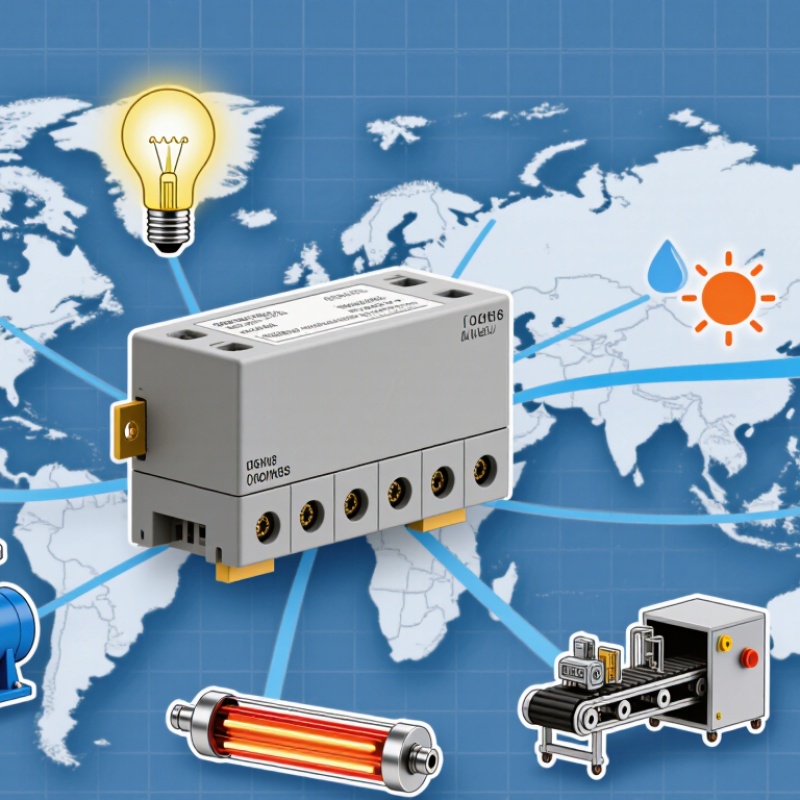
Why Choose Single Phase SSR AC AC for Global Buyers?
What Is a Single-Phase AC-AC SSR and How Does It Work?
A single-phase AC-AC solid-state relay switches alternating current without mechanical contacts. Its input circuit receives a low-voltage control signal. An optocoupler then transfers that signal across an isolation barrier. The output side uses a triac or thyristor pair to control the AC load. It switches silently and produces no contact bounce.
Many AC-AC SSRs use zero-cross switching. The relay turns on near the voltage zero point, reducing electrical noise and inrush stress. Random-turn-on models switch immediately, which suits phase-control applications. IEC 60947-4-3 provides a useful reference for AC semiconductor controllers. The IEA Electricity 2024 report forecasts global electricity demand growth of about 4% in 2024 and 2025. More electrified equipment increases the need for compact, dependable switching. Still, an SSR is not automatically better. Leakage current remains present, even when the load is off.
Tips: Match the relay to load type, voltage, current, and switching frequency. For heaters, allow a safety margin above the rated current. Motors need extra attention during startup. Install a heatsink when calculated power loss requires it. A fuse, ventilation, and thermal inspection are practical safeguards. Small details matter. One overlooked issue is heat.
| Data Dimension | Verified Technical Information | Typical Reference Range or Feature | Why It Matters to Global Buyers |
|---|---|---|---|
| Product Definition | A single-phase AC-AC solid-state relay is an electronic switching device that controls a single alternating-current load without mechanical contacts. | One AC load circuit; semiconductor output using a triac or back-to-back thyristors | It provides silent, fast, and repeatable switching for industrial control, heating, lighting, and automation systems. |
| Basic Operating Principle | An input control signal activates an optically isolated driver. The output semiconductor then conducts AC power to the load and turns off when the AC current reaches a suitable zero-crossing point or when a random-turn-on circuit is used. | Optical isolation with zero-cross or random-turn-on switching | The switching method affects electrical noise, load compatibility, inrush behavior, and control precision. |
| Common Load Voltage | AC-AC SSRs are designed for mains-frequency alternating-current circuits. The usable range depends on the relay’s rated output voltage and safety approvals. | Common product classes include 24–280 VAC and 24–480 VAC | Buyers should select a voltage rating above the highest expected supply voltage, including normal grid variation and transient conditions. |
| Rated Load Current | Output current ratings are normally specified for a defined ambient temperature, mounting method, and heat-sink condition. The actual continuous current may be lower than the headline rating. | Common catalog classes range from approximately 5 A to 100 A | Current capacity must be checked together with derating curves, cabinet temperature, ventilation, and heat dissipation. |
| Control Input | The input side is electrically isolated from the AC output and is available in several control-voltage versions. | Common DC input ranges include 3–32 VDC; AC input versions may also be available | Matching the input range with a PLC, microcontroller interface, temperature controller, or other control system prevents unreliable triggering. |
| Isolation | Optical isolation separates the low-voltage control circuit from the hazardous AC load circuit. | Typical dielectric withstand ratings are around 2.5–4.0 kVrms, depending on construction | Isolation improves system safety and helps protect control electronics from mains voltage and switching disturbances. |
| Switching Mode | Zero-cross SSRs switch near the AC waveform’s zero-voltage point. Random-turn-on SSRs switch when the control signal is applied. | Zero-cross: lower electromagnetic interference; random-turn-on: better phase and timing control | Zero-cross models suit heaters and many resistive loads, while random-turn-on models are more suitable for phase-control or specialized timing applications. |
| Switching Speed | Because there are no moving contacts, an SSR can switch much faster and more frequently than an electromechanical relay. AC cycle timing still affects the practical response. | Typically suitable for frequent switching; zero-cross response is linked to the AC waveform | Fast, wear-free switching is valuable in temperature control, packaging equipment, lighting control, and automated production lines. |
| Output Voltage Drop | The semiconductor output has a small on-state voltage drop, unlike an ideal mechanical contact. | Often approximately 1–2 V, depending on load current and semiconductor design | The voltage drop produces heat, so thermal calculations are essential for reliable continuous operation. |
| Heat Dissipation | Output power loss is approximately related to the on-state voltage drop multiplied by load current. Higher-current SSRs generally require a heat sink or a thermally designed mounting plate. | Heat-sink requirements increase with current, ambient temperature, and enclosure restrictions | Correct thermal management prevents overheating, nuisance failure, and reduced service life. |
| Off-State Leakage Current | Even when commanded off, a semiconductor AC output allows a small leakage current to pass through internal suppression and switching components. | Commonly specified in the mA range; the exact value varies by design | Leakage may cause high-sensitivity lamps or very small loads to glow or remain partially energized. A bleeder resistor or suitable load interface may be required. |
| Load Compatibility | AC-AC SSRs are widely used with resistive loads and can also control some inductive loads when the relay has suitable ratings and suppression. | Resistive heaters: generally straightforward; motors, transformers, and solenoids: require careful review | Inductive loads can create voltage transients, inrush current, and commutation problems, so load type must be confirmed before selection. |
| Surge Protection | Many AC SSR designs use an RC snubber, varistor, or related protection circuit to reduce the impact of voltage transients. | Protection level depends on the circuit design and the installation environment | External fusing, surge protection, and appropriate wiring may still be necessary in industrial or unstable power networks. |
| Protection Requirements | An SSR is not automatically protected against every overload, short circuit, or excessive temperature condition. | Fast semiconductor fuses, circuit breakers, and thermal protection may be required | Coordinated protection helps limit damage during short circuits and supports safer compliance-oriented system design. |
| Acoustic Performance | Semiconductor switching produces no relay-contact clicking and has no mechanical contact bounce. | Near-silent operation under normal conditions | This is useful for laboratory equipment, office systems, medical-related equipment, and noise-sensitive production environments. |
| Service Life | With proper electrical and thermal derating, an SSR avoids mechanical contact wear caused by repeated switching. | Life is mainly influenced by junction temperature, surge events, load current, and switching frequency | Long switching endurance can reduce maintenance needs in high-cycle applications, although semiconductor failure modes must still be considered. |
| Typical Applications | Single-phase AC-AC SSRs are commonly used for heaters, ovens, temperature controllers, packaging machinery, lighting, pumps, fans, and automation panels. | Suitable for repeated on/off control of single-phase AC equipment | A broad application range makes one correctly specified SSR platform adaptable across many international projects. |
| Global Installation Considerations | Electrical requirements vary by country and installation type, including mains voltage, frequency, enclosure design, wiring rules, and required approvals. | Check 50/60 Hz compatibility, rated voltage, terminal spacing, touch protection, and applicable conformity documentation | Reviewing local requirements before purchase reduces certification, integration, and commissioning risks in export projects. |
| Key Selection Checklist | Confirm load voltage, steady-state current, inrush current, load type, switching mode, control input, ambient temperature, heat-sink arrangement, protection, and mounting method. | Choose by the complete operating condition rather than current rating alone | A complete specification review improves reliability and helps avoid premature failure caused by overheating or unsuitable load switching. |
Note: The ranges shown are representative industry values rather than universal specifications. Always verify the latest manufacturer datasheet, derating curve, safety documentation, and local electrical requirements before installation.
It switches an alternating-current load using electronic components instead of mechanical contacts. A low-voltage control signal crosses an isolation barrier and controls the output. No clicking.
It switches near the point where AC voltage crosses zero. This can reduce electrical noise and startup stress for many resistive loads. It is not right for every application.
Random-turn-on models switch as soon as they receive a control signal. They can suit phase-control applications that need more precise timing. Check that the load and control method match.
Common loads include heaters, lighting, pumps, and compact automation panels. Frequent switching is one practical advantage. Motors need closer attention because startup current can be high.
Match the relay to the load’s voltage, current, type, and switching frequency. Leave a safety margin, especially for heaters and motors. A printed rating alone is not enough.
The relay produces heat while carrying current. Use a suitable heatsink and allow airflow when calculations or operating conditions require them. Heat changes everything.
Not necessarily. Some off-state leakage current may remain, so an SSR should not be treated as an isolating switch. Plan a separate disconnect for maintenance.
Confirm supply voltage, frequency, load type, control voltage, cooling needs, and terminal compatibility. Local power systems can differ. I would double-check the installation conditions, not just the datasheet.
A Single Phase SSR AC-AC is a solid-state switching device designed to control AC power in a single-phase circuit. By using electronic components rather than moving contacts, it can switch loads quietly and respond quickly to control signals. For global buyers, its potential advantages include low maintenance, long operating life, compact installation, and reliable switching when correctly matched to the application. Choosing a suitable unit involves checking the load’s voltage and current, the type of load, switching method, control input, heat dissipation, and the operating environment.
Before purchase, buyers should also review relevant safety and product standards, confirm compatibility with local power systems, and allow for appropriate protection against heat, surges, and electrical faults. Single-phase AC-AC SSRs are commonly used to control resistive heating and other compatible AC loads in industrial equipment and automation systems. They are not suitable for every situation: leakage current, heat generation, load inrush, and switching behavior can affect performance. Careful specification and installation help ensure dependable, safe operation.
