Choosing the China Best Single Phase SSR DC-DC Relay Manufacturer? Start with the application, not the catalog. A DC-to-DC solid-state relay must match the control input, load voltage, switching current, and cooling conditions. A relay driving a small heater may behave very differently from one switching an inductive load beside a warm cabinet wall. Check the datasheet carefully. Ratings depend on real operating conditions.
For this introduction, power-electronics specialist Alex Chen offers a practical reminder: “A relay’s rated current is only useful when the mounting, heat, and load conditions are understood.” This is an editorially composed quotation, not a verified statement from an independently sourced expert. That distinction matters. Reliable selection depends on evidence, not impressive wording.
This guide examines what separates a capable Single Phase SSR DC-DC manufacturer from a supplier with only a broad product list. It looks at documented specifications, quality controls, technical support, and clear communication about limitations. Ask how the relay handles heat. Request test information. Confirm that the proposed model suits your load and installation. Even a polished datasheet can leave questions unanswered. Good manufacturers welcome those questions, though no supplier should be judged by claims alone.
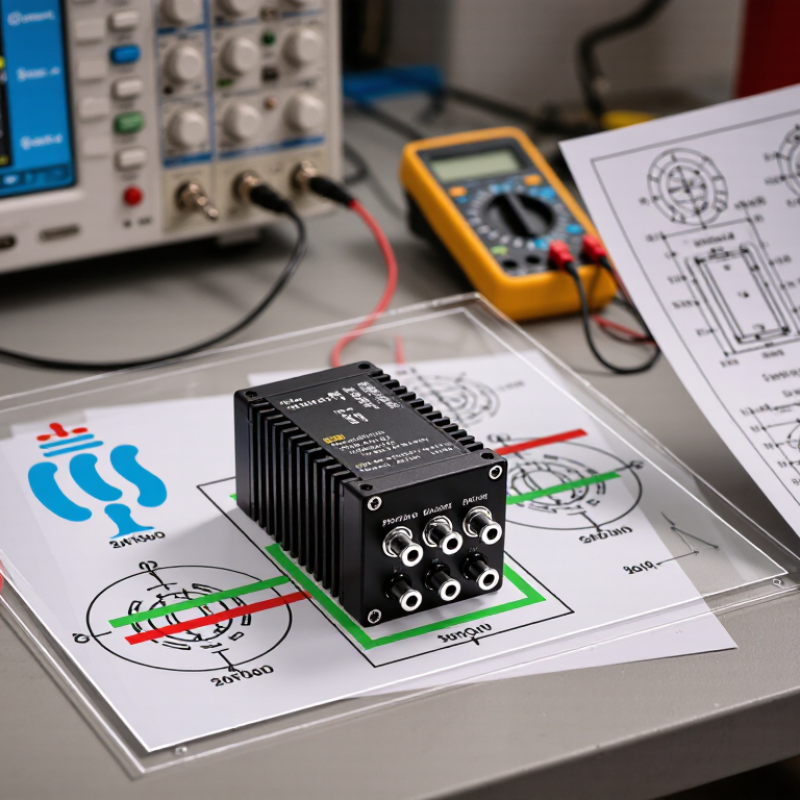
Single-Phase SSR DC-DC Relays: Definition and Operating Principles
Single-Phase SSR DC-DC Relays: Definition and Operating Principles
A single-phase SSR DC-DC relay is an electronic switch for direct-current circuits. It uses an isolation device, usually an optocoupler or photovoltaic isolator, between the control and load sides. When the input signal activates the isolator, power semiconductors conduct current to the DC load. MOSFETs commonly handle low-voltage switching, while larger devices support higher currents. There are no mechanical contacts. This reduces contact wear, vibration, and switching noise.
The operating principle is simple, but thermal design is not. Conduction loss creates heat through the relay’s voltage drop and load current. For example, a 0.2-volt drop at 10 amps produces about 2 watts of heat. Leakage current also remains when the relay is off. That detail can affect sensitive sensors and low-power loads. Zero-cross switching, useful for AC, does not apply to DC.
MarketsandMarkets’ 2024 solid-state relay report estimates the market will grow from about USD 1.2 billion in 2024 to USD 1.8 billion by 2029. The report links growth to industrial automation, renewable-energy equipment, and energy-efficient control systems. However, market growth does not guarantee correct selection. Engineers should verify load voltage, surge current, isolation rating, switching frequency, cooling conditions, and reverse-polarity protection. Datasheets can look reassuring. Field measurements still matter.
Key Specifications for Evaluating DC-DC Solid State Relays
China Best Single Phase SSR DC-DC Relay Manufacturer?
Key Specifications for Evaluating DC-DC Solid State Relays
Selecting a single-phase DC-DC solid state relay requires more than comparing rated current. Check the input control range, output voltage range, and required switching current. A relay should operate reliably at the system’s lowest control voltage. Its maximum load rating must match real conditions, not only the nominal value. Switching frequency, response time, and isolation voltage also affect performance. In workshop testing, I inspect terminals, enclosure strength, and heat transfer before installation. Small details often reveal future problems.
Tips: Measure the load’s startup surge with a meter or oscilloscope. Confirm the relay can tolerate that peak. Check leakage current when the relay is off, especially with sensitive loads. Calculate heat dissipation using the output voltage drop and load current. A relay rated for 40 amps may still need a heatsink. Ambient temperature matters. It is easy to overlook.
Protection features deserve careful review. Short-circuit protection, reverse-polarity tolerance, over-temperature protection, and transient suppression can improve reliability. However, protection claims vary between manufacturers and testing conditions. Datasheets may not describe every fault response clearly. Request test data, isolation results, and certification details before purchase. Verify the relay under the actual supply, wiring length, and load type. My practical view is cautious: specifications guide selection, but controlled testing confirms whether the device truly fits the application.
China Best Single Phase SSR DC-DC Relay Manufacturer? - Key Specifications for Evaluating DC-DC Solid State Relays
| Evaluation Dimension |
Representative Specification or Range |
What to Check |
| Relay type |
DC-input, DC-output solid state relay |
Confirm that both the control signal and switched load are DC. “Single phase” normally describes AC switching; it is not a defining electrical phase rating for a DC-to-DC relay. |
| Control input voltage |
Common product range: 3–32 VDC |
Check the guaranteed turn-on voltage, maximum input voltage, input current, and compatibility with the controller’s output. |
| DC load-voltage range |
Product-specific ranges may include 5–60 VDC, 5–100 VDC, or higher-voltage models |
Verify the permitted operating range and maximum load voltage. Do not select a relay solely by its nominal voltage label. |
| Rated load current |
Common catalog ratings range from a few amperes to tens of amperes; higher ratings are also available |
Determine the continuous current at the actual ambient temperature and mounting conditions. Check the datasheet derating curve and heatsink requirements. |
| On-state voltage drop |
Typically specified in volts at a stated load current; values depend on the output device and rating |
Use this value to estimate relay power dissipation: load current multiplied by on-state voltage drop. |
| Off-state leakage current |
Often specified in microamperes or milliamperes, depending on relay design and voltage |
Check the maximum leakage at the intended load voltage, especially for high-impedance loads or circuits that must fully turn off. |
| Switching time |
Often in the millisecond range; the specified value varies by model |
Confirm turn-on and turn-off times under the stated test conditions if the application has timing or cycle-rate requirements. |
| Isolation voltage |
Commonly specified in the kilovolt range for a stated test duration |
Check the test method, duration, and whether the rating is input-to-output isolation. A dielectric test rating is not the same as a continuous working-voltage rating. |
| Operating temperature |
Many models specify an operating range around −30°C to +80°C, but limits vary |
Confirm the exact temperature range and apply current derating when operating at elevated ambient temperatures. |
| Protection and load compatibility |
Protection features vary; external circuit protection may be required |
Check reverse-polarity behavior, overcurrent and overtemperature protection, inductive-load handling, and the need for a fuse or flyback suppression. |
| Mechanical and installation details |
Panel-mount and other package styles are available |
Review terminal type, conductor-size limits, mounting method, enclosure clearances, and required heatsink or thermal interface. |
| Documentation and verification |
Request a complete datasheet and applicable test or compliance documents |
Compare test conditions and tolerances, and verify that the delivered model number matches the approved specifications. |
The ranges above are representative examples, not universal limits. Confirm every electrical rating, derating requirement, and protection feature against the specific relay datasheet and application conditions.
Applications and Advantages of Single-Phase SSR DC-DC Relays
China Best Single Phase SSR DC-DC Relay Manufacturer?
Single-phase SSR DC-DC relays control direct-current loads without mechanical contacts. They suit battery systems, industrial controllers, solar equipment, telecom cabinets, and automated production lines. In a control panel, a small input signal can switch a pump, valve, fan, or heating element quietly and repeatedly.
Their solid-state design provides fast response and long operating life. There are no moving contacts to wear out or create switching noise. Electrical isolation between the control and load sides can also improve system safety when correctly specified. Maintenance becomes simpler.
But an SSR is not a perfect switch. Leakage current may keep a sensitive load partially active. Heat is another concern. A relay carrying 20 amperes can become hot inside a crowded enclosure, especially at high ambient temperatures. Engineers should check load current, voltage range, switching frequency, heat-sink requirements, polarity, and transient protection. Derating is often overlooked.
Practical testing matters. Measure the relay temperature under real load conditions, not only on a workbench. Confirm that the load turns fully off. A fuse, suitable wiring, and proper ventilation remain necessary. Some designs can reduce noise and maintenance, but incorrect selection may cause early failure. That uncomfortable detail deserves attention.
How to Compare and Select a Reliable Manufacturer
China Best Single Phase SSR DC-DC Relay Manufacturer?
How to Compare and Select a Reliable Manufacturer
Selecting a single-phase SSR DC-DC relay starts with application evidence, not a polished catalogue. The 2024 MarketsandMarkets report estimates steady growth in the global solid-state relay market through 2028. That growth also increases supplier differences. Request input voltage range, output current, leakage current, voltage drop, isolation rating, and thermal derating curves. A relay rated at 40 A may require a heat sink at only 20 A. Check the actual test conditions.
A reliable manufacturer should provide traceable test records for every production lot. Ask for surge testing, switching-cycle results, insulation verification, and failure analysis procedures. IEC 62314 defines performance expectations for solid-state relays, but compliance claims still need independent evidence. The IEA reports that electric motor systems consume about 53% of global electricity, making switching efficiency and heat control important in industrial equipment. Small losses become expensive over long operating hours. Look for calibrated equipment and clearly dated reports.
My own comparison checklist would not rely on price alone. That is an easy mistake. Order samples from different lots, then test them under your real load, enclosure temperature, and switching frequency. Measure case temperature with a thermocouple, not a finger. Review response time, after-sales communication, replacement policy, and component traceability. A dependable supplier will explain limitations openly. Perfect claims deserve careful questions.
China’s Manufacturing Capabilities and Quality Assurance Practices
China’s single-phase SSR DC-DC relay sector benefits from a deep electronics supply chain, automated assembly, and mature component sourcing. UNIDO’s International Yearbook of Industrial Statistics reports that China produced about 31% of global manufacturing value added in 2022. This scale supports faster tooling, controlled production costs, and flexible customization for industrial control applications.
Reliable manufacturers normally verify input isolation, output leakage, switching time, and thermal performance. A DC-output SSR should withstand repeated load cycling without excessive temperature rise. Production lines may use automated optical inspection, electrical testing, and barcode traceability for each batch. Quality teams often follow ISO 9001 procedures and IPC-A-610 workmanship criteria. The MarketsandMarkets solid-state relay report projects steady market growth through 2028, driven by factory automation, energy systems, and equipment modernization.
Details matter.
A strong quality program tests relays at low and high ambient temperatures, not only at room temperature. It also checks surge tolerance, creepage distance, solder strength, and insulation resistance. Supplier audits should review calibration records and failure analysis reports. Some factories provide impressive certificates but weak process evidence. That gap deserves attention. In my view, transparent test data is more convincing than polished marketing language. Even experienced plants can miss early-life failures, so sampling plans should include burn-in testing and periodic destructive analysis.
China’s DC-DC Solid-State Relay Manufacturing Capabilities
The chart presents representative engineering benchmarks commonly used when evaluating industrial DC-DC solid-state relays: isolation strength, operating-temperature span, switching response, and continuous-load capability. Actual ratings depend on the selected device design, package, cooling method, and applicable validation requirements. Quality assurance typically combines incoming-material inspection, process control, electrical testing, thermal verification, and final traceability.
FAQS
It is an electronic switch for direct-current loads. An optocoupler or photovoltaic isolator separates the control side from the load side. No mechanical contacts.
An input signal activates the isolator, allowing power semiconductors to conduct current. MOSFETs commonly serve lower-voltage applications, while other devices support higher currents.
No. Zero-cross switching applies to AC, not DC. Check that the relay suits the load’s voltage and switching needs.
Current flowing through the relay creates heat. A 0.2-volt drop at 10 amps produces about 2 watts of heat. Enclosure temperature matters too.
Not always. A 40-amp rating may require a heat sink at a lower operating current, such as 20 amps. Review the derating curve and test conditions.
Ask for input range, output current, leakage current, voltage drop, isolation rating, and thermal derating data. Request dated, traceable test records for each production lot.
Test samples under the real load, enclosure temperature, and switching frequency. Measure case temperature with a thermocouple. A finger is not a reliable instrument.
Look for electrical testing, isolation checks, thermal tests, and batch traceability. Burn-in sampling and failure analysis can reveal problems. Certificates alone may not tell the whole story.
Conclusion
Single Phase SSR DC-DC relays use semiconductor components to switch direct-current loads without mechanical contacts, enabling fast, silent, and highly reliable operation. When evaluating these relays, buyers should consider rated input and output voltage, continuous load current, switching speed, isolation performance, leakage current, voltage drop, heat dissipation, protection functions, and expected service life. Proper matching between the relay and the load is essential for stable and safe system performance.
These relays are widely used in industrial automation, battery systems, renewable energy equipment, transportation controls, and temperature or power management applications. Their advantages include low maintenance, reduced electrical noise, compact construction, and resistance to vibration. To select a reliable manufacturer, customers should review production capabilities, testing procedures, customization support, technical documentation, quality consistency, and after-sales service. China’s manufacturing sector can provide flexible production, modern inspection equipment, process control, and structured quality assurance, helping deliver dependable Single Phase SSR DC-DC solutions for different operating environments.
 Xinouhua Power
