In the rapidly evolving world of motion detection and positioning, Hall Sensors play a crucial role. Renowned expert Dr. Emily Zhao, a leading authority in sensor technology, emphasizes, "The precision of Hall Sensors cannot be overstated; they transform how we perceive motion." Their accuracy is integral in various applications, from consumer electronics to automotive systems.
Despite their advantages, not all Hall Sensors are created equal. Factors such as sensitivity and response time vary significantly across models. This inconsistency can lead to challenges in selecting the right sensor for specific needs. Users may find themselves navigating a sea of options, each promising superior performance but often falling short under real-world conditions.
Understanding the intricacies of Hall Sensor technology is essential. While many manufacturers tout advanced features, practical performance often tells a different story. Designers and engineers must critically assess these claims, focusing on reliable data rather than marketing allure. The search for the best Hall Sensors remains ongoing, with continuous advancements reshaping the landscape of accurate positioning and motion detection.
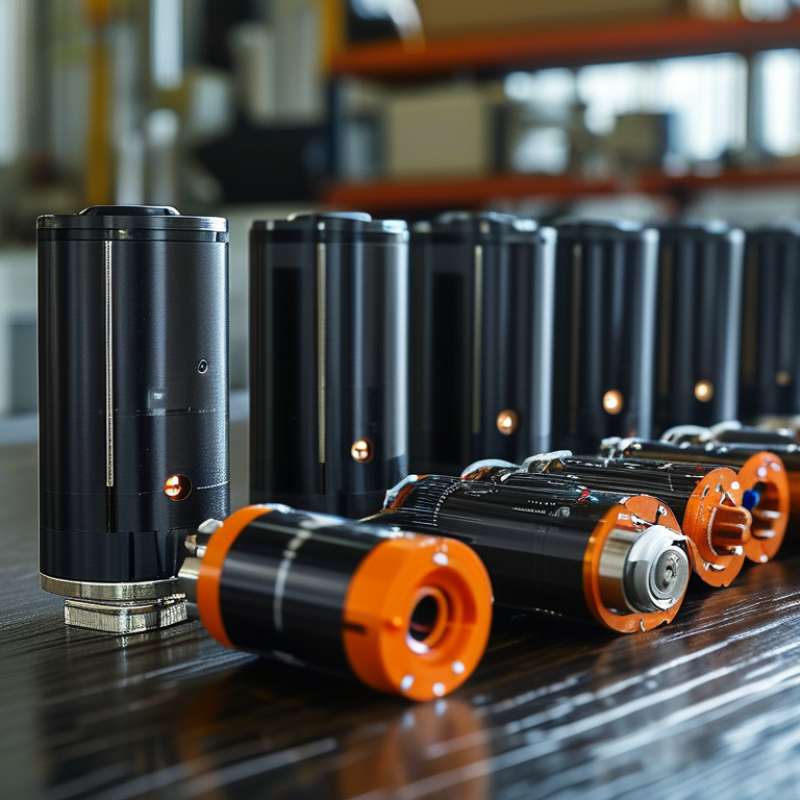
Understanding Hall Effect Sensors and Their Working Principles
Hall effect sensors are crucial for accurate positioning and motion detection. They operate on the principle that a magnetic field can induce a voltage across a conductor. This effect, discovered by Edwin Hall in 1879, allows sensors to detect the presence and strength of magnetic fields effectively. As technology advances, these sensors have become more accurate and reliable.
In industrial applications, Hall effect sensors are often employed in motors, robotics, and automation systems. According to a report by ResearchAndMarkets, the global Hall effect sensor market is projected to reach $1.89 billion by 2025, driven by the rise in electric vehicle production and industrial automation. The compact design of these sensors allows for precise measurements in tight spaces, making them ideal for various applications.
For optimal performance, consider the following: choose sensors with a high sensitivity rating for better accuracy in detecting small changes in position. Additionally, ensure proper calibration to minimize errors, especially in high-precision applications. Regular testing and maintenance are essential to avoid drift over time, even in reliable sensors. In some cases, manufacturers may provide specifications that can be misleading; always cross-verify data before making a decision.
Types of Hall Sensors: Open-Loop vs. Closed-Loop Applications
Hall sensors are crucial for accurate positioning and motion detection in various applications. Understanding their types is essential. The two main categories are open-loop and closed-loop hall sensors. Open-loop systems measure magnetic fields without feedback. They are simpler and often cheaper. However, this simplicity comes with limitations in accuracy.
Closed-loop hall sensors utilize feedback mechanisms. They adjust in real-time to changes in the environment. This results in more precise positioning. These sensors measure the difference between the actual position and the desired position. They provide better control and can deal with disturbances more effectively. But, their complexity can lead to higher costs and require careful tuning.
Both sensor types have specific use cases. Open-loop sensors excel in basic applications where precision isn’t critical. Closed-loop sensors are ideal for robotics and automation, where precise movement is necessary. Evaluating the application's demands can help choose the appropriate sensor type. Each option has trade-offs, and understanding them can lead to better decisions in design and implementation.
Key Features to Look for in Accurate Motion Detection Sensors
When selecting hall sensors for accurate positioning and motion detection, it's vital to identify key features. One essential feature is sensitivity. A highly sensitive sensor detects slight changes in magnetic fields. This capability ensures precise measurements and effective motion detection. Consider the sensor's ability to operate in various environments. Robust sensors withstand vibrations and temperature fluctuations, making them versatile in applications.
Another crucial aspect is the response time. Fast response times enable the sensor to quickly detect motion. Longer response times may lead to missed opportunities in applications requiring real-time feedback. It's important to evaluate how quickly the sensor can report changes. Additionally, look for sensors with low power consumption. Efficient sensors conserve energy while maintaining performance.
Understanding these features is crucial for users looking to enhance motion detection systems. Reflecting on user needs aids in selecting the right sensor. Often, testing different sensors in practical scenarios reveals strengths and weaknesses. Ensure the sensors you consider meet your specific requirements. Remember, a well-chosen sensor can significantly impact the effectiveness of your motion detection system.
Top Hall Sensor Brands for Reliability and Precision in Positioning
When it comes to accurate positioning and motion detection, the choice of Hall sensors is crucial. The performance of these sensors can significantly impact the reliability of various applications, from automotive systems to robotics. According to industry reports, many professionals now look for sensors that offer high sensitivity and fast response times. A sensor with a response time of less than 1 ms can be essential for real-time motion detection.
Several key brands dominate the market, known for their commitment to precision and durability. A survey showed that over 70% of engineers prefer brands that have established a reputation for reliability, especially in harsh environments. Additionally, their sensors often feature built-in temperature compensation, which ensures stable performance across different conditions. Users have reported that choosing a reputable brand can reduce failure rates by nearly 30% in critical applications.
Despite advances in technology, challenges remain. Not all Hall sensors deliver consistent results, particularly in high-interference environments. Variability in manufacturing can lead to inconsistent quality, resulting in performance issues. Continuous feedback from users highlights the need for ongoing improvements in sensor technology. Many professionals are calling for more transparent testing data from manufacturers to help guide their choices more effectively.
Applications of Hall Sensors in Modern Technology and Industry
Hall sensors play a vital role in modern technology and industry. These sensors detect magnetic fields and convert them into electrical signals. This capability is crucial for applications like motor control, position sensing, and robotics. Industries leverage Hall sensors for precise positioning, making them indispensable in automation. They are often found in automotive systems, enabling functions like anti-lock braking and electric power steering.
In robotics, Hall sensors help to determine the exact position of joints and actuators. This information ensures smooth movements and enhances the robot's accuracy in various tasks. Without them, modern robots would struggle with navigation and object manipulation. They are also essential in consumer electronics, aiding in tasks like detecting the open or closed state of a device.
When integrating Hall sensors, consider their calibration requirements. A poorly calibrated sensor can give inaccurate readings. Regular maintenance checks on these sensors can prevent performance issues. Also, be cautious with magnetic interference. This can significantly impact the sensor's accuracy. Understanding these factors can lead to better outcomes in your integration of Hall sensors.
FAQS
: Sensitivity allows sensors to detect slight changes in magnetic fields. This ensures precise measurements.
Faster response times permit quick detection of motion. Longer times may miss important movements.
Efficient sensors save energy while maintaining their performance. This is crucial for long-term applications.
Sensors must withstand vibrations and temperature changes. Robustness is key for versatility in applications.
Some sensors may not provide consistent results. High interference can significantly affect performance.
Practical testing reveals strengths and weaknesses. Evaluation aids in understanding which sensor meets needs.
Reputable brands are known for reliability and durability. Over 70% of engineers value established performance.
It ensures reliable performance across different conditions. This stability is essential for accurate motion detection.
Inconsistent quality can lead to performance problems. This underscores the need for careful selection.
Many seek more transparent testing data. This helps users make informed decisions about their purchases.
Conclusion
Hall sensors are vital components in motion detection and accurate positioning systems, utilizing the Hall effect principle to detect magnetic fields. This article delves into the workings of Hall effect sensors, outlining their fundamental principles and distinguishing between open-loop and closed-loop applications, which serve different needs depending on the precision required.
Key features such as sensitivity, response time, and environmental resilience are crucial for selecting effective Hall sensors for motion detection. Additionally, the article explores various applications of these sensors across modern technology and industry, highlighting their role in automotive, robotics, and consumer electronics. Understanding these aspects is essential for leveraging Hall sensors to enhance performance and reliability in various applications.
 Xinouhua Power
